

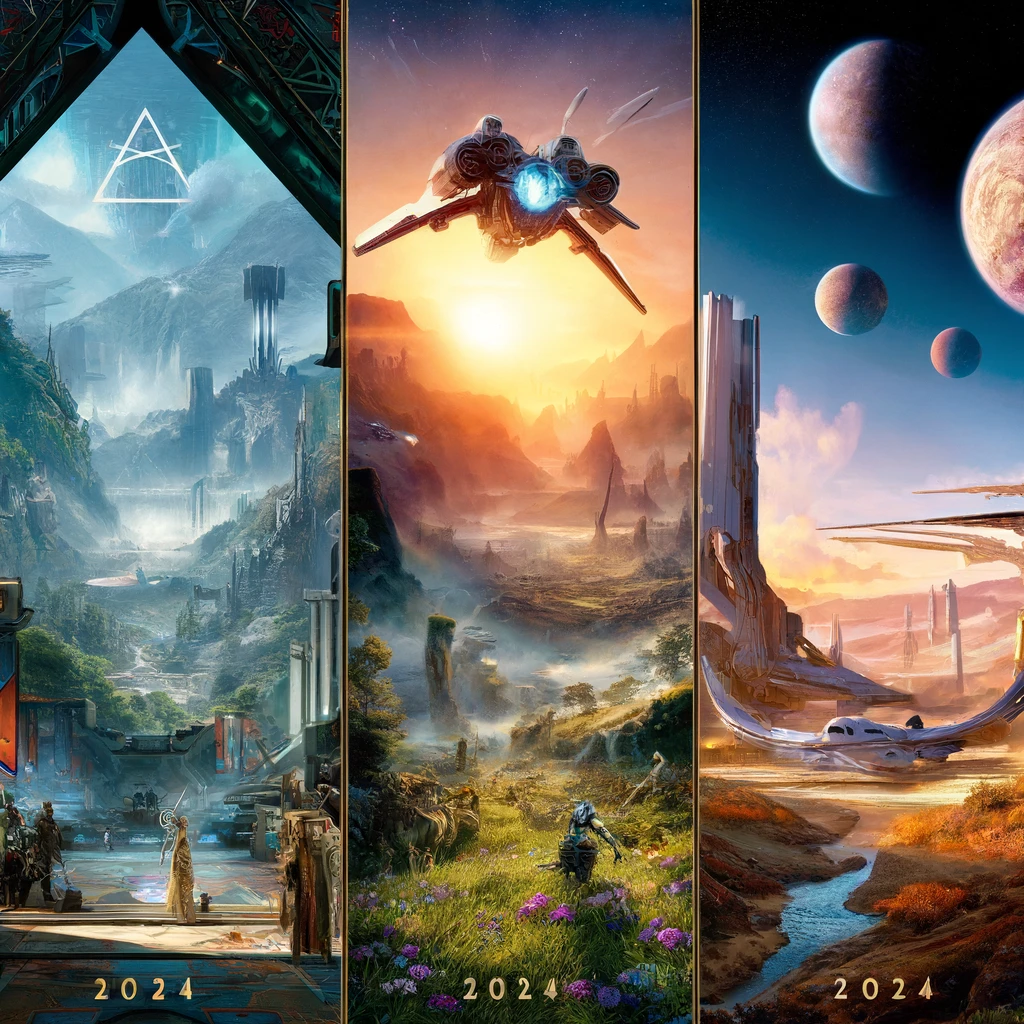
The Best Video Games to Look Forward to in 2024
Anticipated AAA Titles: A Look into Upcoming Blockbuster Games
The gaming industry continues to expand rapidly, bringing with it a slew of highly anticipated AAA titles known for their high quality and large budgets. This article provides an overview of the top upcoming blockbuster games, previews major franchise releases, explores expected innovations in gameplay and graphics, discusses the development studios behind these exciting titles, and assesses their predicted impact on the gaming community.
Overview of Top Upcoming Blockbuster Games
As we look into the future, several AAA titles stand out for their hype and potential impact:
- “Elder Scrolls VI”: Long awaited by fans of the Elder Scrolls series, this title promises to expand on the rich open-world tradition of its predecessors.
- “Starfield”: Another ambitious project by Bethesda Game Studios, this game aims to set a new standard for sci-fi RPGs.
- “Horizon Forbidden West”: Following the success of “Horizon Zero Dawn,” this sequel is expected to further explore its unique post-apocalyptic world with new mechanics and an expanded storyline.
Detailed Previews of Major Franchise Releases
- “Grand Theft Auto VI”: Rumors suggest a return to Vice City with possible new mechanics that could revolutionize the open-world genre once again.
- “Final Fantasy XVI”: This installment seeks to blend classic RPG elements with cutting-edge graphics and storytelling, appealing to both old fans and new.
- “The Legend of Zelda: Breath of the Wild Sequel”: Highly anticipated, this sequel is expected to build on the innovative open-world gameplay of its predecessor with new features and an even deeper narrative.
Expected Innovations in Gameplay and Graphics
The next generation of AAA titles is set to offer significant advancements:
- Gameplay: Developers are focusing on creating more immersive and interactive worlds with dynamic weather systems, advanced AI interactions, and more responsive environments.
- Graphics: With the power of new hardware like the PlayStation 5 and Xbox Series X, expect stunning visual upgrades, including better lighting effects, more detailed textures, and increased frame rates.
Development Studios Behind These Titles
The success of these anticipated games often rests on the shoulders of veteran development studios:
- Bethesda Game Studios: Known for their expansive open-world games, they are developing both “Elder Scrolls VI” and “Starfield.”
- Guerrilla Games: The creators behind the “Horizon” series, are known for their expertise in creating lush, vivid game worlds.
- Rockstar Games: A powerhouse in the industry, Rockstar is rumored to be working on the next “Grand Theft Auto,” which is expected to set new benchmarks for the genre.
Predicted Impact on the Gaming Community
The release of these AAA titles is likely to have a profound impact on the gaming community:
- Cultural Phenomenon: Games like “Grand Theft Auto VI” and “Elder Scrolls VI” are more than just games; they’re cultural events that influence and reflect gaming culture worldwide.
- Community Engagement: These games often come with vibrant communities that share gameplay tips, fan fiction, and detailed explorations of game lore.
- Economic Impact: Major releases can significantly impact the gaming industry’s economy, influencing everything from console sales to peripheral devices.
Breakthrough Indie Games
Indie games continue to carve out significant niches in the gaming industry, often bringing innovative ideas and fresh gameplay mechanics that can compete with, and sometimes surpass, those from larger studios. This overview highlights promising indie projects for 2024, explores unique themes and mechanics in indie development, examines successful Kickstarter campaigns, discusses how indie games compete with larger studios, and assesses their critical reception and community support.
Highlighting Promising Indie Projects for 2024
Several indie projects stand out for their creativity and potential impact in 2024:
- “Echoes of the End”: This narrative-driven adventure game blends intricate storytelling with puzzle-solving mechanics set in a beautifully crafted fantasy world.
- “Luminous”: A visually striking puzzle platformer that uses light manipulation as its core gameplay mechanic, offering a fresh take on the genre.
- “Aetherborn”: A game that explores philosophical themes through innovative environmental storytelling and gravity-defying platforming mechanics.
Themes and Mechanics Unique to Indie Development
Indie games are particularly known for their unique thematic explorations and gameplay mechanics:
- Narrative and Themes: Indie developers often tackle unconventional or deeply personal themes, including mental health, existential questions, and innovative narrative structures not commonly found in mainstream games.
- Gameplay Mechanics: Due to fewer constraints and lower risks compared to big studios, indie games frequently experiment with unorthodox mechanics, blending genres and gameplay styles in new ways.
Successful Kickstarter Campaigns and Their Outcomes
Kickstarter has been a crucial platform for indie developers:
- “Hollow Knight: Silksong”: A sequel to the critically acclaimed “Hollow Knight,” this project massively succeeded on Kickstarter, allowing for an expansion in scope and polish that was highly anticipated by fans.
- “Frostpunk 2”: Following the success of the original, its Kickstarter campaign helped fund a sequel with more ambitious environmental challenges and deeper survival strategies.
How Indie Games Compete with Larger Studios
Indie games hold their own against bigger studios by:
- Niche Markets: Targeting specific gamer demographics that may be overlooked by larger companies, such as retro enthusiasts or fans of experimental art games.
- Community Engagement: Indie developers often build close relationships with their audiences through open development processes, beta testing involvement, and direct feedback mechanisms via social media.
Critical Reception and Community Support
- Critical Acclaim: Many indie games receive high praise for their originality and depth. Titles like “Celeste” and “Undertale” have garnered critical acclaim and numerous awards for their design and storytelling.
- Community Support: Indie games often thrive on community support. Successful indie titles frequently benefit from a dedicated fan base that promotes the games through word-of-mouth, fan art, modding, and more.
Advances in Virtual Reality Gaming
Virtual Reality (VR) gaming continues to evolve, pushing the boundaries of immersive entertainment. With advancements in technology and growing developer interest, VR is setting new standards for how games are played and experienced. This overview will cover the latest in upcoming VR games, hardware requirements, the integration of VR with traditional gaming, cross-platform potentials, and current trends in VR game development.
Upcoming VR Games and Experiences
2024 promises several exciting VR titles that aim to leverage improved technology for deeper immersion:
- “Starfield VR”: Anticipated as a VR adaptation of Bethesda’s space exploration game, offering vast universes to explore in a truly immersive format.
- “Echoes of the Past”: A VR historical adventure that lets players experience and interact with different historical eras, from ancient civilizations to recent history.
- “VR Sports League”: A new title that aims to bring a range of sports into the virtual realm, allowing for realistic gameplay mechanics and competition.
Hardware Requirements and Recommendations
As VR games become more sophisticated, the hardware required to run them effectively continues to evolve:
- High-Performance PCs: Most high-end VR games require powerful graphics cards, fast processors, and a substantial amount of RAM. Recommended specs often include at least an Nvidia GeForce RTX 3060 or equivalent and recent i7 processors or better.
- Standalone VR Systems: Devices like the Oculus Quest 2 offer standalone VR experiences without the need for a PC. These are becoming increasingly powerful and offer a good balance of performance and convenience.
- VR Accessories: Advanced controllers, haptic feedback suits, and treadmills enhance the immersive experience but also require additional investment.
Integration of VR with Traditional Gaming
VR technology is not just creating new gaming experiences but also enhancing traditional gaming:
- Hybrid Games: Titles like “Resident Evil 7” offer both standard and VR gameplay modes, allowing players to choose their preferred way to play.
- Enhanced Interaction Models: VR integration allows for more natural interaction models in traditional games, such as using hand tracking for real-time strategy games.
Potential for Cross-Platform VR Experiences
Cross-platform play is becoming a focal point for VR, enhancing its appeal:
- Multi-Platform Accessibility: Developers are increasingly designing VR games that are playable across different systems, such as PlayStation VR, PC-based VR like HTC Vive, and standalone systems like Oculus Quest.
- Cloud Gaming Integration: Cloud gaming platforms like Google Stadia are starting to explore options for streaming VR content, which could greatly expand accessibility and reduce hardware constraints.
Trends in VR Game Development
Current trends shaping the future of VR gaming include:
- Social VR: Games like “VRChat” and “Rec Room” highlight the potential of VR for social interactions, creating spaces where players can interact in a more personal and immersive way.
- Educational and Training Applications: Beyond entertainment, VR is being used for educational purposes and professional training, offering interactive and engaging ways to learn and develop skills.
- Focus on Comfort and Accessibility: Developers are prioritizing making VR experiences more comfortable and accessible to a wider audience, addressing common issues like motion sickness and the need for large, unobstructed play areas.
Multiplayer and Esports Phenomena
The world of multiplayer gaming and esports continues to expand, driven by a vibrant community and the growing popularity of competitive gaming. This article explores new entries in popular multiplayer genres, games poised to rise in esports prominence, developments in online tournament platforms, the community and social aspects of multiplayer games, and balancing and patching strategies that keep these games fair and competitive.
New Entries in Popular Multiplayer Genres
2024 looks to introduce several promising titles across various multiplayer genres:
- Battle Royale: “Survivor’s Realm” offers innovative mechanics, such as dynamic weather that affects gameplay strategies, setting it apart from existing games like “Fortnite” and “PUBG.”
- MOBA (Multiplayer Online Battle Arena): “Legends of Nexus” is set to introduce a new universe with unique heroes, hoping to compete with giants like “League of Legends” and “Dota 2.”
- First-Person Shooters (FPS): “Echo Ops” promises a blend of tactical team play and high-octane action, aiming to attract both casual players and hardcore competitors.
Games Expected to Rise in Esports Popularity
Certain games show significant potential to become the next big hits in the esports arena:
- “Quantum Clash”: A strategy game that incorporates real-time decision-making with deep tactical gameplay, designed with esports in mind.
- “Arena of Fate”: This new MOBA is designed to shorten match times to around 20 minutes, making it more accessible and appealing for both players and viewers in a competitive setting.
Developments in Online Tournament Platforms
The infrastructure supporting online esports competitions is rapidly evolving:
- Enhanced Streaming Capabilities: Platforms like Twitch and YouTube are improving their live streaming technology to offer higher quality and more interactive viewer experiences.
- Mobile Esports Growth: With the rise of mobile gaming, platforms are also focusing on accommodating mobile esports, which is gaining significant traction globally.
Community and Social Aspects of Multiplayer
The social dynamics of multiplayer gaming are crucial for both player retention and community building:
- In-Game Communication Tools: Developers are integrating more advanced communication tools directly into games, facilitating better teamwork and community interaction.
- Community-Driven Content: Games are increasingly supporting user-generated content, from custom maps and skins to entirely new game modes, which keeps the community engaged and invested.
Balancing and Patching Strategies
Maintaining game balance in multiplayer games is critical, especially in a competitive esports context:
- Regular Updates and Patches: Developers must regularly adjust game mechanics and balance to ensure fair play and keep the gameplay fresh.
- Community Feedback: Engaging with the community to gather feedback on game balance and incorporating those insights into game patches is a common strategy.
- Beta Testing: Before major releases, games often go through extensive beta testing phases where balancing issues can be identified and addressed based on real player data.
Role-playing games (RPGs)
Role-playing games (RPGs) continue to be a staple of the gaming industry, offering deep narratives and extensive worlds that captivate players for hours on end. Innovations in technology and game design are constantly pushing the boundaries of what RPGs can offer. This overview will explore the exciting new worlds and narratives in upcoming RPGs, the latest in character customization, the integration of AI in storytelling, the benefits of cross-platform play, and the anticipation surrounding expansion packs and downloadable content (DLC).
New Worlds and Narratives in Upcoming RPGs
2024 promises several RPGs with rich, immersive worlds and compelling storylines:
- “Chronicles of the Forgotten Realm”: Set in a vast open world, this game combines traditional fantasy elements with dark, complex narratives where choices have real consequences on the game world.
- “Star Wanderers”: An RPG set in a sci-fi universe, offering players the chance to explore different planets, each with unique ecosystems and civilizations.
Innovations in Character Customization
Character customization in RPGs has evolved far beyond choosing physical appearances:
- Deep Trait Systems: Newer RPGs allow players to customize character traits that affect not only stats but also interactions with other characters and the environment, leading to a more personalized gaming experience.
- Dynamic Skill Progression: Instead of fixed skill trees, some upcoming RPGs offer dynamic skill progression that evolves based on a player’s actions and choices throughout the game.
Integration of AI in Storytelling
Artificial Intelligence (AI) is revolutionizing storytelling in RPGs by making it more dynamic and responsive:
- Adaptive Narratives: AI algorithms can adjust storylines in real-time, responding to a player’s decisions and creating a more personalized story experience.
- Procedural Content Generation: AI is used to generate unique quests and story elements, which can provide a fresh experience even on multiple playthroughs.
Cross-Platform Play and Its Benefits
Cross-platform play is becoming more common in RPGs, enhancing the player experience by:
- Broader Social Interaction: Players on different gaming systems can join forces or compete against each other, expanding the game’s community.
- Unified Progression: Cross-platform saves allow players to start playing on one platform and pick up where they left off on another, providing flexibility and convenience.
Anticipation for Expansion Packs and DLC
Expansion packs and DLC are critical components of modern RPGs, offering new content that extends the life of the game:
- “Eldergate: Beyond the Mists” Expansion Pack: Set to introduce a new continent with additional quests, new characters, and expanded storylines.
- Seasonal Updates: Games like “Shadow of the Ancients” implement a seasonal model where new story elements, challenges, and rewards are introduced periodically.
Strategy and Simulation Games
Strategy and simulation games are genres that challenge the mind and offer players the opportunity to control, build, and manage virtual environments with complex systems. This article will delve into upcoming releases in strategy gaming, discuss advances in simulation realism and complexity, explore the depth of economic and resource management features, highlight the impact of community-driven content, and address learning curves and accessibility in these games.
Releases to Look Out for in Strategy Gaming
Several highly anticipated strategy games are set to redefine the landscape in 2024:
- “Empire Ascendant”: This game promises to blend traditional turn-based strategy with real-time tactical battles, offering a deep, historically-inspired campaign spanning multiple epochs.
- “Galactic Governor”: A space strategy game where players manage an entire solar system, dealing with politics, economy, and interstellar warfare, offering a grand scale of strategic planning.
Advances in Simulation Realism and Complexity
Simulation games continue to push the boundaries of realism and complexity:
- Environmental Dynamics: Newer simulation games feature dynamically changing environments that react to player decisions, affecting everything from local ecosystems to global weather patterns.
- AI Behavior: Advanced AI algorithms provide more realistic interactions and behaviors in NPCs, enhancing the immersion and complexity of simulations.
Economic and Resource Management Features
Core to many strategy and simulation games are the economic and resource management systems:
- “City of Tomorrow”: Focuses on building a sustainable city with an intricate economy, where resource management impacts not only the city’s growth but also its environmental footprint.
- “Oceans & Empires”: Offers a maritime trade simulation where players must manage fleets, trade routes, and economic policies to dominate global trade.
Community-Driven Game Features and Mods
The role of the community in enhancing and extending the life of games cannot be understated:
- Modding Tools: Games like “Forge of Realms” provide extensive modding tools that allow players to create custom scenarios, maps, and even game mechanics.
- Online Sharing Platforms: Developers are incorporating features that let players share their creations easily within the game, fostering a vibrant community of content creators.
Learning Curves and Accessibility
While strategy and simulation games are known for their depth, they also pose challenges in terms of accessibility and learning curves:
- Tutorials and Learning Modes: Developers are increasingly focusing on tutorial systems that teach gameplay mechanics interactively. For example, “Dynasty Rulers” uses a scenario-based tutorial system that gradually introduces complex concepts.
- Accessibility Features: To accommodate a wider audience, more games include accessibility options such as adjustable UI sizes, colorblind modes, and simplified control schemes.
Adventure and Exploration Games
Adventure and exploration games captivate players with their rich narratives, expansive worlds, and intricate puzzles. These games are designed to immerse players in environments where exploration and decision-making drive the gameplay experience. This article explores key aspects of modern adventure and exploration games, including settings in expansive worlds, narrative techniques, trends in graphics and art styles, integration of puzzles, and the influence of player choices on game outcomes.
Exploration Games Set in Expansive Worlds
Modern adventure games often feature vast, open worlds that players can explore freely:
- “Mystic Realms”: This game sets players in a lush, dynamically evolving world where every corner and crevice can unveil secrets, lore, and quests that contribute to a larger narrative.
- “Frontier Voyagers”: Offers a science-fiction universe where players explore different planets, each with unique ecosystems, civilizations, and challenges.
Narrative Techniques and Story Branching
The storytelling in adventure games has become more sophisticated, utilizing various narrative techniques:
- Dynamic Storytelling: Games like “Echoes of Time” implement dynamic storytelling where the story and even the game environment react to player decisions, creating a personalized narrative arc.
- Branching Pathways: Many adventure games now feature complex decision trees that affect not only the immediate game environment but also its ultimate outcomes, enhancing replay value.
Graphics and Art Style Trends
The visual presentation in adventure games varies widely, depending on the artistic vision and the story being told:
- Photo-Realistic Graphics: Titles such as “Lost Horizons” use cutting-edge graphics technology to create realistic environments that enhance immersion.
- Stylized Art: Games like “Wanderlust Tales” use more stylized, artistic graphics that can help convey tone and emotion, sometimes drawing on influences from graphic novels or classic animation.
Integration of Puzzles and Problem-Solving
Puzzles are a staple of adventure games, requiring players to think critically and solve problems to progress:
- Environmental Puzzles: “Architect’s Quest” integrates puzzles directly into the game environment, requiring players to manipulate elements within the world to unlock paths or secrets.
- Logic and Riddles: Some games challenge players with riddles or complex logic puzzles that must be solved to unravel story elements or discover new areas.
Player Choice and Impact on Game Outcomes
The element of choice is critical in modern adventure games, significantly impacting narratives and endings:
- Consequential Choices: In “Shadows of Fate,” player decisions lead to significant changes in character relationships, available quests, and even the game’s conclusion.
- Moral Dilemmas: Games often present players with moral choices that challenge their ethics and affect the game world’s perception of the player character.
Sports and Racing Titles
Sports and racing games continue to be immensely popular, combining the thrill of competition with the joy of gameplay. Innovations in realism, strategic partnerships, and evolving game mechanics are defining features of these genres. This article delves into the latest trends in sports and racing games, highlighting innovations in game realism, the role of licenses and partnerships, developments in racing mechanics, multiplayer features, and anticipated releases from top franchises.
Innovations in Sports Game Realism
The quest for realism in sports games has never been more intense:
- Advanced Physics Engines: Newer titles utilize sophisticated physics engines that accurately simulate the natural movements of athletes, the dynamics of various sports equipment, and realistic environmental effects.
- Player Likeness and Motion Capture: Technologies like motion capture are being employed extensively to create lifelike player animations. Games are increasingly using scans of actual athletes to ensure accurate representation in games.
- AI Improvements: AI opponents react more intelligently and adaptively, providing a more challenging and realistic experience that mimics the strategies used by professional players and teams.
Licenses and Partnerships with Major Leagues
Securing licenses from major sports leagues remains crucial for the authenticity and appeal of sports games:
- Exclusive Rights: Franchises like “FIFA” (soccer) and “Madden NFL” (American football) have long-standing exclusive partnerships with their respective leagues, allowing them to use team names, logos, and player likenesses.
- Expansion of Licensing: Newer games are also securing rights not just for major leagues but for lower divisions and women’s leagues, expanding the scope and inclusivity of sports gaming.
Evolution of Racing Game Mechanics
Racing games are not just about speed but increasingly about the feel and mechanics of driving:
- Handling and Customization: Games now offer detailed options for vehicle customization affecting performance, handling, and aesthetics, allowing players to fine-tune cars to their exact preferences.
- Track Dynamics: Modern racing games include dynamic weather systems and track conditions that change in real-time, affecting race strategies and vehicle performance.
Multiplayer Features in Sports and Racing Games
Multiplayer functionality is a key aspect of sports and racing games, enhancing replay value and competitiveness:
- Online Leagues and eSports: Many sports games now support online leagues where players can compete in season-long competitions, mimicking real-world sports seasons.
- Co-op Modes: Racing games often feature cooperative gameplay modes, such as team races or relay challenges, where players can team up to compete against AI or other player teams.
Expected Releases from Top Sports Franchises
Looking ahead, several high-profile sports and racing games are set to make an impact:
- “FIFA 2025”: Anticipated to include even more teams and leagues, including expansive women’s league options.
- “NBA 2K25”: Expected to further refine its gameplay mechanics and introduce more comprehensive career modes.
- “Gran Turismo 8”: Likely to push the boundaries of realism in car physics and track design, maintaining its status as a top-tier racing simulation.
Mobile Gaming Innovations
The mobile gaming industry is rapidly evolving, continuously introducing groundbreaking technologies and gameplay experiences that redefine how users interact with their portable devices. This article explores upcoming hits in the mobile game market, the integration of cross-platform capabilities and cloud gaming, innovative monetization strategies, advancements in mobile graphics and processing power, and the role of augmented reality (AR) in future mobile games.
Upcoming Hits in Mobile Game Markets
Several exciting titles are set to captivate mobile gamers in 2024:
- “Shadow Legacy”: An RPG with deep lore and character customization that promises to offer a console-like experience on mobile platforms.
- “Arena Conquest”: A multiplayer battle arena game that aims to capitalize on the esports trend with fast-paced, competitive gameplay and tournament capabilities.
- “EcoSphere”: A simulation game that allows players to build and manage their own ecosystems, teaching sustainability through interactive gameplay.
Cross-Platform Capabilities and Cloud Gaming
Cross-platform play and cloud gaming are transforming mobile gaming by enhancing accessibility and playability:
- Cross-Platform Play: Developers are increasingly designing games that players can start on their mobile devices and continue on PCs or consoles, such as “Fortnite” and “Among Us,” which maintain gameplay continuity across platforms.
- Cloud Gaming: Services like Google Stadia and Xbox Cloud Gaming (Project xCloud) are making high-quality gaming accessible on mobile devices without the need for high-end hardware specifications.
Monetization Strategies and Consumer Reaction
As the mobile gaming industry grows, so does the sophistication of its monetization strategies:
- In-App Purchases (IAP): While still prevalent, developers are becoming more strategic about IAPs to avoid alienating players, focusing on cosmetic items or convenience features that do not affect game balance.
- Subscription Models: Some developers are shifting towards subscription models that offer ad-free experiences and access to a library of games, such as Apple Arcade or Google Play Pass.
- Consumer Reaction: There is growing sensitivity around pay-to-win models, prompting developers to consider more consumer-friendly monetization approaches.
Enhanced Graphics and Processing for Mobile Devices
Advancements in mobile technology have significantly boosted the capability of mobile games:
- High-End Graphics: Newer smartphones with advanced GPUs and high refresh rate screens are capable of supporting games with graphics that rival traditional consoles.
- Processing Power: With the introduction of more powerful processors like the Apple A series or Qualcomm Snapdragon, mobile devices can handle complex game mechanics and larger game worlds more efficiently.
Role of AR in Future Mobile Games
Augmented reality is set to play an increasingly prominent role in mobile gaming:
- Immersive Experiences: Games like “Pokémon GO” and “Harry Potter: Wizards Unite” have demonstrated the potential of AR to offer immersive and interactive gaming experiences by blending the digital and real worlds.
- Technological Improvements: Continuous improvements in AR technology, such as enhanced spatial recognition and integration with mobile hardware, are paving the way for more sophisticated AR games.
Remasters and Reboots
The gaming industry frequently revisits classic games, offering them a new lease on life through remasters and reboots. These updated versions can introduce beloved titles to new audiences and give longtime fans a chance to relive their favorite gaming experiences with modern enhancements. This overview discusses the process of modernizing classic games, the enhancements typically made, community expectations, the challenges involved, and a comparison between original and modern versions.
Classic Games Getting a Modern Update
Several iconic games are slated for modern updates, capturing the attention of both new players and nostalgic fans:
- “The Legend of Zelda: Ocarina of Time Remastered”: An iconic adventure game receiving updated graphics and optimized controls to appeal to today’s gaming standards.
- “System Shock: Enhanced Edition”: A reboot of the classic sci-fi title with completely overhauled graphics and reimagined gameplay elements while preserving the original’s atmosphere and story depth.
Enhancements and Additions to Rebooted Titles
Updates to classic games typically include several types of enhancements to improve graphics, gameplay, and overall accessibility:
- Graphics Overhaul: Remasters often feature higher-resolution textures, improved lighting effects, and modern rendering techniques to bring visual elements up to current standards.
- Gameplay Tweaks: Developers might update user interfaces, control schemes, and game mechanics to align with modern gameplay expectations and hardware capabilities.
- Additional Content: New features, levels, or story elements may be added to expand the original experience and offer more value to players.
Community Expectations and Nostalgia Factors
Balancing modern updates with the nostalgic charm of classic games is crucial:
- Preserving the Original Spirit: While fans generally welcome enhanced graphics and smoother gameplay, they also expect remasters and reboots to stay true to the original game’s spirit and core mechanics.
- Nostalgia Appeal: Part of the allure of remasters is the nostalgia they evoke, so developers must carefully preserve beloved aspects of the game to satisfy longtime fans.
Challenges in Updating Classic Games
Updating a classic game is not without its challenges:
- Technical Limitations: Older games may not have been designed with modern hardware in mind, presenting technical challenges in terms of both graphics and gameplay updates.
- Fan Expectations: Developers face the tough task of updating a game’s aesthetics and mechanics without alienating its core fanbase, who may have specific expectations based on their memories of the original.
Comparison of Originals vs. Modern Versions
When comparing originals to their modern counterparts:
- Graphical Fidelity: While the charm of pixelated graphics or simple 3D models has its appeal, modern versions with detailed textures and sophisticated effects generally offer a more immersive visual experience.
- Gameplay Improvements: Modern versions often feature more intuitive controls and user interfaces, making the games more accessible to new players and enjoyable for returning fans.
- Authenticity and Depth: Sometimes, the modern versions might miss some of the ‘soul’ of the original, either by changing too much or by failing to capture the subtle nuances that fans loved.
FAQs: The Best Video Games to Look Forward to in 2024
1- What are some of the most anticipated AAA titles for 2024?
Key releases include “Elder Scrolls VI,” “Starfield,” “Horizon Forbidden West,” “Grand Theft Auto VI,” “Final Fantasy XVI,” and “The Legend of Zelda: Breath of the Wild Sequel.”
2- What innovations in gameplay and graphics are expected in these AAA titles?
Expectations are set for immersive worlds with dynamic weather systems, advanced AI interactions, and stunning visual upgrades leveraging new hardware capabilities from consoles like the PlayStation 5 and Xbox Series X.
3- Which development studios are behind these anticipated 2024 releases?
Notable studios include Bethesda Game Studios (“Elder Scrolls VI” and “Starfield”), Guerrilla Games (“Horizon Forbidden West”), and Rockstar Games (“Grand Theft Auto VI”).
4- How will these AAA titles impact the gaming community?
These games are expected to be cultural phenomena, driving significant community engagement and economic impact within the gaming industry.
5- What are some promising indie projects for 2024?
Exciting indie titles for 2024 include “Echoes of the End,” “Luminous,” and “Aetherborn,” each bringing unique gameplay mechanics and thematic explorations.
6- How do indie games compete with larger studios?
Indie games often target niche markets and engage deeply with their communities, sometimes using innovative or unorthodox gameplay mechanics that distinguish them from larger studio releases.
7- What new VR gaming experiences are coming in 2024?
Look forward to titles like “Starfield VR,” “Echoes of the Past,” and “VR Sports League,” which promise to utilize advanced VR technology for deeper immersion.
8- What are the hardware requirements for the latest VR games?
High-end VR games will require powerful PCs with specs like an Nvidia GeForce RTX 3060 or equivalent, and standalone VR systems like the Oculus Quest 2 are becoming more capable and popular.
9- How are multiplayer and esports games evolving in 2024?
New multiplayer genres and esports potentials are being explored with games like “Survivor’s Realm” (Battle Royale), “Legends of Nexus” (MOBA), and “Echo Ops” (FPS), each pushing the boundaries of competitive gameplay.
10- What major trends are influencing RPGs and strategy games in 2024?
RPGs are advancing with AI-driven storytelling and cross-platform play, while strategy games are focusing on enhanced realism and complex economic and resource management systems.
References and Links:
- IGN – for comprehensive reviews and previews of upcoming games.
- Polygon – for detailed articles and insights into gaming trends and anticipated titles.
- GameSpot – for news, reviews, and previews of the latest video games.
- Kotaku – for in-depth gaming articles and coverage of the gaming industry.
- PC Gamer – for specific information on PC gaming and upcoming PC titles.
- Eurogamer – for European perspectives on the latest gaming news and developments.
- GamesRadar+ – for future tech and game release information.
- The Verge – for technology-focused gaming news and reviews.
- Rock Paper Shotgun – for PC gaming enthusiasts and detailed game analysis.
- Metacritic – for aggregating reviews and providing a broad consensus on upcoming games.